Study design and examination schedule

Detailed information on the design of the SCAPIS study has been described by G Bergström et al in J Intern Med 2015.
The recruitment and examinations were performed at six university hospitals (Gothenburg, Linköping, Malmö/Lund, Stockholm, Umeå and Uppsala).
The exact number of included subjects in the SCAPIS baseline study and the planned numbers in the SCAPIS re-examination are as follows:
Gothenburg, 6265 - 3133
Linköping, 5057 - 2529
Malmö/Lund, 6251 - 3126
Stockholm, 5038 - 2519
Umeå, 2507 - 1254
Uppsala, 5036 – 2518
The study examinations were performed on two to three separate days separated by one to two weeks and divided into Core examinations and Additional examinations.
Questionnaire
The questionnaire used a total of 150 questions separated in validated sets relating to dimensions central to the research aims. Detailed information on diet, environmental and lifestyle factors as well as data on psychosocial well-being, socioeconomic status and other social determinants have been collected.
Anthropometry, ECG, blood pressure and physical activity
Standard anthropometric data as well as blood pressure and ECG measurements have been collected. Physical activity was measured by accelerometer testing for seven days.
Imaging and functional tests relating to the cardiovascular system
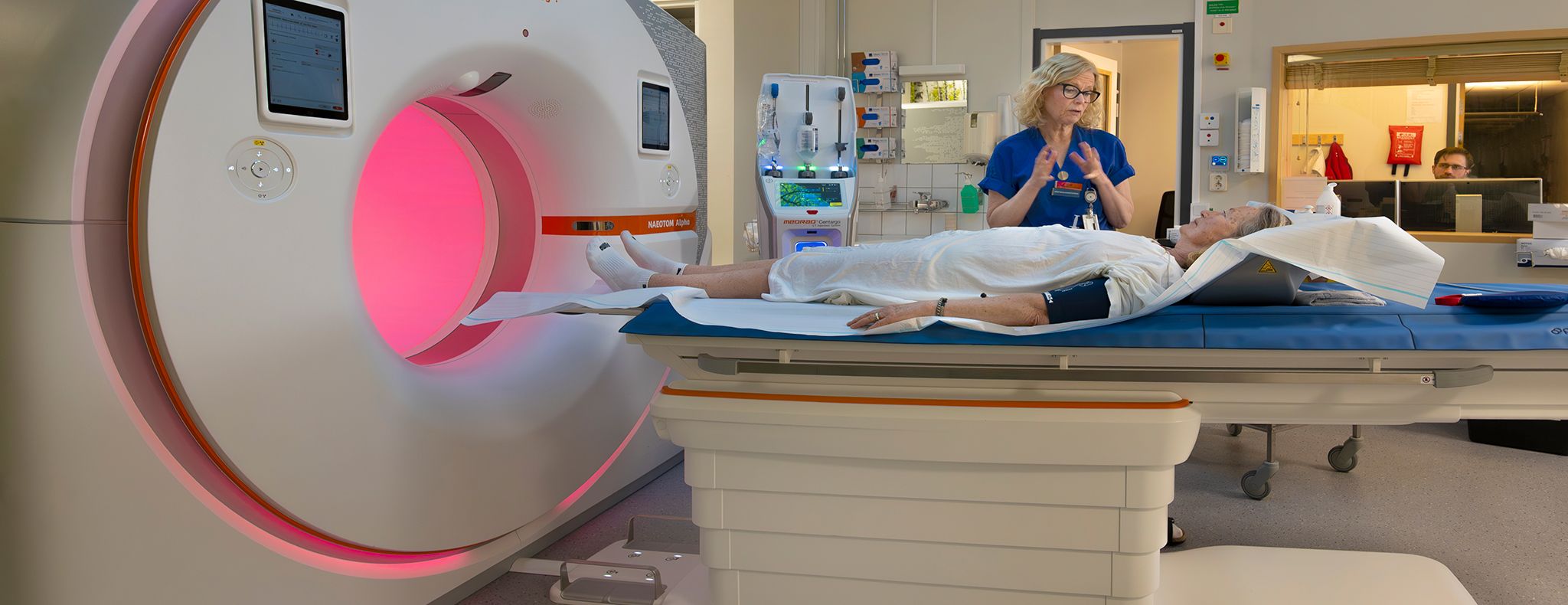
To assess the status of the three major vascular beds involved in cerebral, cardiac and peripheral artery disease, we used CT angiography for coronary disease, ultrasound and magnetic resonance imaging (MRI) for carotid disease and ankle-brachial index for peripheral artery disease.
The coronary circulation was assessed directly with CT angiography using contrast injection and high-frequency imaging (Motoyama, JACC 2009). The study also measured the calcium content in each coronary artery. CT angiography is extremely powerful and gives information on morphology of calcified and non-calcified plaques and their lumen obstruction, as well as remodelling of lumen geometry. Thus, CT angiography provides information that could not be obtained by conventional intra-arterial angiography.
Ultrasound is the best validated non-invasive technique to detect plaque size and number in the carotid arteries (Mathiesen, Circulation 2001; Spence, Nat Clin Pract Neurol 2006). Patients with moderate to large plaques in their carotid arteries were asked to participate in a third visit for MRI to get in-depth information on plaque inflammation, lipid-rich necrotic core, thick fibrous cap, intra-plaque haemorrhage, and plaque volume (Corti, Euro Heart J 2011).
Imaging and function tests relating to the lung
Early structural changes in lung tissue was imaged using a high-resolution CT scan over the full lung volume (Heussel, Eur Radiol 2009). This provides information on airway wall thickness and emphysema and thereby essential information in the phenotyping of chronic obstructive pulmonary disease.
Dynamic spirometry was used according to the protocol of the BOLD study to measure forced expiratory volume and forced vital capacity, and also includes a slow vital capacity manoeuvre (Buist, Lancet 2007.). Spirometry was performed 15 minutes after the subjects had inhaled 400 μg of salbutamol. Carbon monoxide diffusion capacity was also measured.
Imaging tests relating to metabolism
One of the unique strengths of SCAPIS is that it combines vascular and lung imaging with CT imaging of epicardial, intra-abdominal, intramuscular and intrahepatic fat deposits (Kullberg, Int J Obes 2007). In addition, the liver was imaged using dual-energy CT; this approach allows us to identify excess iron stores in the liver, which is a sign of steatosis (Deugnier, World J Gastroenterol 2007).
Blood sample
A 100 ml venous blood sample was collected from each participant in the fasting state. Immediate analyses of cholesterol, HDL, LDL, triglycerides, glucose, HbA1c, high-sensitive CRP and creatinine are carried out. Remaining blood was biobanked for future analyses.
In addition to the core examinations, all sites expanded on their own research interests by adding additional examinations.
The SCAPIS database is currently enriched with detailed, unbiased information for years to come, by linking the database with Swedish population registries. Data on endpoints (myocardial infarction or cardiac interventions, stroke and exacerbation of chronic obstructive pulmonary disease) are identified annually by linking the unique Swedish personal identification numbers to the Swedish National Hospital Discharge Register and the Swedish Cause of Death Register and other national registers such as the Pharmaceutical Register of Prescribed Drugs.
The external and internal validity of these registers are high (). Data from national quality registers (e.g. SWEDEHEART, Riks-STROKE) will be used to retrieve more detailed information on the type of event and interventions used.
SCAPIS has been evaluated and approved by the Swedish ethics authority (EPM) as a multi-centre study. The local radiation committees approve the use of radiation.